Gye Greene's Thoughts

Gye Greene's Thoughts (w/ apologies to The Smithereens and their similarly-titled album!)

Wednesday, December 30, 2020

Secret to happiness

In my 30s I was somewhat into board games -- inspired, in part, by a friend from high school who finds board games at good prices at garage sales and thrift stores, then sells them at higher prices on "game collector" websites and uses the profits to fund additional game purchases for himself.  (He could totally afford to just buy the games that he wants -- but making the process self-sustaining is far more interesting.)

I e-mailed him to ask if he was sufficiently interested in a semi-collectable board game that I should "suitcase" it back to Seattle for him -- post-pandemic (!!!) -- or whether I should just give it to my (adult) niece, or my wife's co-worker, here in Australia?  He said I should just dispose of it here. 

As part of this conversation, I mentioned that I'm planning on going through my various games and getting rid of most of them:  I've now realized -- self-aware middle-aged guy that I am -- that spending 1-5 hours playing a game is not how I want to spend my time.  So -- I'm only going to keep a few.  And then I proceeded to -- off the top of my head -- list my "keepers".

It turns out that I ended up with twenty-seven (and thought of two more after I'd sent the e-mail).  So that's probably more than "non-game" people would have.

I asked my friend about that -- but he says that he's not a good reference point, as he has over a thousand.  So: clearly he's into games.  ;)


This reminded me of one of my "middle aged guy wisdom" insights:  the secret to happiness is to figure out what you like doing -- and then maximizing your time doing that (as long as it isn't harmful to yourself or others).  So:  I'm glad he's still doing "the game thing".  :)

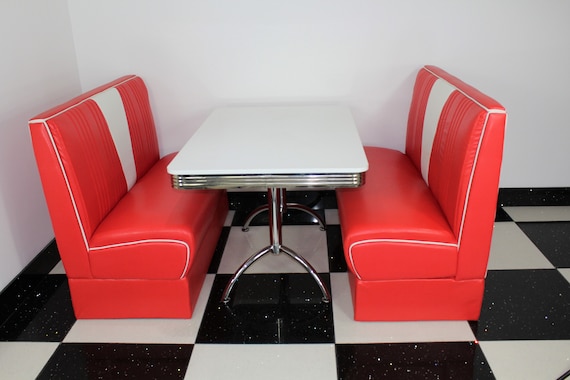
Related to this:  I'm always charmed and intrigued by people who have interests, and then set up little work-shops or "zones" to accom-modate their interest (e.g. a "jewelry-making station").  I know he has an extensive system of shelves, down in his basement, for game storage:  so I'd like to think that he also has a  secondhand diner booth nearby -- with proper lighting -- so that he can play games at a moment's notice, leave half-finished games set up, and etcetara.

He actually doesn't, as it turns out:  but he likes the idea...  :)


--GG

Labels: , , , ,

Saturday, February 29, 2020

What the weekend is for

The weekend -- or, if you don't work "business hours", then "your days off" -- is for two things:
  • Doing things you enjoy
  • Getting things done

If you spend the weekend doing things you enjoy:  that's great!  But, then you aren't allowed to complain that you didn't accomplish anything -- because you actually spent the weekend in a different way (which was fun -- although less productive).

And if you spend the weekend accomplishing tasks on your "To Do" list:  nicely done!


The worst thing, I would say, is to intend to get things done, but then to fritter away the weekend avoiding the task (procrastinating!) by doing a lot of small, meaningless things that you don't really enjoy, either.  That is a wasted weekend.

Whereas, if you consciously decide "Screw my 'To Do' list:  I'm going to do [fun thing] instead!" -- well, you've made a choice.  Good job.


As above, you lose the right to complain about your "wasted" weekend -- because you chose to do [fun thing] instead.   But, hey:  at least you had a nice time.  :)


--GG


Labels: , ,

Friday, April 19, 2019

Better to be diplomatic than to accuse

If you start the interaction with an accusation it puts the other person on the defensive; it also means that if your accusation was wrong you need to back down and apologize, or else dig in further (even though you know you're wrong).

This is particularly true when using e-mail -- where there's no vocal inflection to carry the tone, just phrasing.

Instead, perhaps be humble; frame it as a confirmatory question.


Example #1:  "You should never submit Form Z without manager's approval!", try "I just need to confirm:  it looks like you submitted Form Z without getting manager's approval:  is this correct?"

Example #2:  "I sent you this e-mail a month ago -- and you haven't replied.  I guess that's an answer in itself."  Instead, try "I'm just following up:  I don't have a record your response to the below e-mail from a month ago:  could you please forward your original response, or provide a response now?  Thanks!"


To my mind, the underlying aim isn't about blame:  it's about accomplishing or clarifying something (e.g. "verifying that form was properly approved; if not, reminding the worker of the level of approval needed for that form"; "discovering the answer to the initial query".


Maybe there's a reasonable explanation for what you think is the other person's mistake or oversight.  Or, maybe there isn't.  Regardless, I don't see a lot of advantages of starting the interaction aggressively rather than mildly:  you just come off as an unpleasant person.


--GG

Labels: , ,

Friday, March 08, 2019

Music more regularly

I've posted a variation of this before.  And now I'm saying it again.  :)


One of my middle-aged wisdom items is that the secret to happiness is to spend as much time as you can doing the things you like -- and avoid as much as possible doing the things you don't.  Within reason:  you still gotta pay bills and wash the dishes; and don't do things that are bad for you or harmful to others.


So:  it takes me a long while to get around to playing an instrument -- but once I do, I find it great, and realize I'm an idiot for not playing instruments more often:  the very act of playing [nearly always] makes me happy (i.e. intrinsic rather than extrinsic rewards).  

And then I don't pick up a guitar for (literally) another two months....  ("Duh.")


So, starting maybe half a year ago, I started making an effort to play something [nearly] every day:  bongos; guitar; (unplugged) electric bass; etc.   I even started keeping drumsticks in the car, so I could "play the steering wheel (and dashboard)". 

Often I'll do the "guitar cousin" thing of noodling around on guitar or bass while watching t.v. (Netflix, really) -- often coming up with some interesting riffs that I'll use for "something".

So:  not task-oriented (i.e. directly songwriting, or recording).   But I'm just enjoying the experience -- and getting incrementally better in the process.

Just making myself happy.  :)


Which -- BTW -- none of the kids seem to do that.  So my musical inclination doesn't seem to have passed through to my children:  maybe the grandchildren? 

But I do notice that The Girl doodles and draws of her own accord:  good.  :)


--GG

Labels: , , , , ,

Thursday, November 29, 2018

The music is embedded in me

Yesterday I re-watched an Australian-made movie called Three Summers, which takes over three summers at a fictional folk music festival in Western Australia.  The main character plays the theremin.  One of his character traits is that he's passionate about music.


"Music isn't something you choose.  If you can just drop it, you never had it."

--Roland, Three Summers (movie), 27:42; found 11/28/18 (May've already logged when watched the movie the first time, half a year to a year ago)


Roland:  "You girls are great.  You're really, really talented -- and music's always gonna be in your lives, there's no doubt about that.  But you have to ask yourself:  its it your vocation?  Is it the only thing you want?" 

Girl:  "Yes."

Roland:  "Then you have to make music for itself, not because it'll get you a hit.  You have to know that even if, after a lifetime of playing, you never get that hit, you'll still believe you made the right choice.  [...]  There's a band playing tonight -- an Afghani folk band.  My guess is they're unlikely to ever get a hit, and they probably know it -- but still they play."

(Three Summers (movie), 1:10:45; found 11/28/18 (May've already logged when watched the movie the first time, half a year to a year ago))


That made me think about my own relationship to music.  Over the past two decades or so, I would for literally months without touching a guitar, bass, or keyboard -- but then when I did get around to it, I would spend a few hours noodling around and enjoying making music, just for the inherent enjoyment of it.

In my youth I was in a band with my cousin and my roommate.  After the band broke up, I wasn't single-minded enough to do the "solo" thing -- although this was pre-internet -- so maybe I might've marshalled my forces a bit more if I'd been able to post some music online and mount a webpage.

But:  over the two months I've made an effort to make playing music a daily part of my life:  I have a small hand drum under my desk that I'll play for a few minutes before or after my evening session of typing on the computer (checking e-mail, etc.); I have a tambourine in the front passenger seat, so that when I'm stopped at traffic lights I can play it like a hand drum; and I received a small synthesizer for my birthday, which is about the length of the span between my outstretched thumb and pinky -- which I play on a near-daily basis during the week, on the "train" portion of my daily commute (it has a headphone jack).

And whenever I play music, I feel... good.

I have a substantial backlog of songs to record -- which I always say is better than the opposite:  tons of time, but no songs in the queue.  One of these days I'll sit down and record some of them.  And some-someday I'll sign up for some online song-hosting service, and try selling downloads of my songs.

I'm unlikely to get rich from selling my songs.  But I enjoy playing music; writing songs; and recording songs.  I earn a living from my "day job" -- so I'm happy to just be involved with music on a personal, informal basis.

Music makes me happy.

Yup.  :)


--GG

Labels: , , ,

Saturday, October 21, 2017

Not a valid excuse

This blog entry is based on one the kids not getting ready for bed as instructed -- and using "but [sibling] wasn't getting ready" as a justification for their own lack of compliance.

No.  Saying "no one else is doing the right thing" is not a valid excuse among my children.  For that matter, nor is "everyone else was doing the wrong thing".

I want my children to do what they think is right -- even if no one else is.

Even better:  be a leader, and try to get others to do the right thing.

If people think you're weird for being different:  fine; so be it.  It's better to be "different"... but "in the right".


That's what I say, at least.


--GG

Labels: , ,

Friday, September 15, 2017

Rule to my children to help people

Here's another rule for my children:  "If someone needs help, and you're able to help -- do it."

The exception is if there are insurmountable odds (e.g. trying to singlehandedly rescue someone from an angry mob), or if it would put you at extreme disadvantage (e.g. impoverishing yourself to financially support someone else).

But if it's within your means to help:  do it.


I don't usually talk about my good deeds.  But, I'm writing this for my kids, when they're old enough to look through my old blog entries.  Here's the inspiration for this blog entry:

-The Big Issue is a "street magazine", kind of, that's sold by mostly-homeless folks.  I routinely over-tip the Big Issue sellers:  the current cover price is $7; I typically give them $20 and tell them to keep the change.  It helps them, and makes them happy.  Sometimes it'll be the only sale that they made for that shift.

-Today while buying the new issue of The Big Issue from one of my regular vendors, there was a homeless guy standing next to her -- skinny and crying, clearly distraught, and with body language that made him seem like maybe he had a mental illness.  The vendor said that the guy had just been robbed, and lost all of his money and his medications.  So I dug deep into my wallet and gave him fifty bucks -- because I figured he could use it (and it might make him just a little less sad).  I also gently rested my hand on his arm, just for a moment.


I could potentially connect "helping people" to some sort of religious conviction -- but most (or all?) of the major religions have "helping people" as one of their basic rules.  But really:  it's just "what you do".


--GG

Labels: ,

Wednesday, April 12, 2017

Choose your own adventure

Some of you might not be old enough to remember this, but there used to be a series of books called Choose Your Own Adventure.  You would be in a role ("You are an Arctic explorer..."; "You are an astronaut..."), the book would describe a situation, and every page or so you'd have to decide on a course of action.

Based on the course of action, you'd turn to a certain page in the book:  "If you stop to ask for directions, turn to page 55.  But if you choose to keep walking around the neighborhood, hoping you'll find the cafe, turn to page 91."

I was thinking today -- as a middle-aged guy might think -- about all the decisions I've made in my life, and how they've sent me down different paths.

Just as a quick example:  I could've gone to a less-expensive state university, lived at home with my parents, and just commuted to campus.  But if I'd done that, I wouldn't have met Old Roommate -- who I then wouldn't have roomed with when I finally graduated.  And I wouldn't have ran out of money partway through college, had to drop out, then got the job at the movie theatre, where I met Crash Adams, the drummer, who started the band with me and Guitar Cousin.

And if I had gone to the state university, I probably would've gone straight to graduate school -- and either gone to the same one I went to, but been five years earlier (meaning that I wouldn't have had classes with the woman who became my wife!) -- or else gone to another school altogether.  So:  spooky.


Basically, everyone's life is a series of decisions.  Each decision has consequences -- some predictable (e.g. Decide to start selling drugs; end up getting shot in the leg and having your money stolen); and some not so predictable ("right place, right time" situations). 


On the one hand, I think the trick is to make decisions that maximize the chances for the outcomes you want:  try to get whatever sort of education or work experience that prepares you for the job you want; avoid drugs; spend time with good, supportive people, not bad or negative people.

But!  Sometimes the bad choices -- as well as the negative things that happen to you -- can place you well for opportunities that you never would've expected.  As above:  I was really disappointed when I ran out of money and had to leave college.  But it turned out that that two-year(-ish) period was one of the best times of my life. 


So -- you don't know.  Do what you can; think long-term; but if things go bad, maybe it's just setting you up for something good.

Life is a long, interesting story -- and (from your perspective) you're the main character.

Take good notes:  maybe it can become a screenplay.


--GG

Labels: ,

Thursday, January 12, 2017

Excess office donation

This is for the kids, to read someday.  I think they're too young to fully appreciate it now.


Whenever there's a "gift collection" at work for a birthday, retirement, illness, or whatever -- I always put in about three(?) times what "normal" people put in.  (I have a standard amount.)

My reasoning is that my excess donation inflates the total, which then gives the recipient the impression of a greater number of supportive people.  This, presumably, makes the recipient happier, and/or feel more cared for.  This is a good thing.

I'm willing to spend a bit extra, if it makes someone happy.


--GG

Labels: , , ,

Thursday, January 05, 2017

Where do I get it from

(Actually, that's bad grammar:  I should've called this entry "From where do I get it?" or simply "Where do I get it?")
 

It's probably normal to attribute personality characteristics to your genetic forebearers:  people like to find order and patterns and meanings in things.

Here's my interpretation of where some of my traits come from.  I'm only going to list my positive traits, because to list my negative traits -- of which I have many -- and then attribute them to various ancestors would be unkind.


So:

-From my dad, and my dad's side (and some of my mom's side), I get my mechanical and spatial ability.

-From my dad's side, I get my verbal ability and wordplay.

-Sadly, I did not get my dad's sense of direction...

-From my mom, and my grandpa on her side, I get my general good nature and mostly-jolly disposition.

-From my grandma on my mom's side, I get my tendency to "take in strays".

-From my grandma on my dad's side, I get my "food is love" tendency, my hugginess, and my desire to compliment people and make them feel good about themselves.

-From my grandpa on my dad's side I get the (late-blooming) interest in woodworking, and the tendency to solve mechanical problems by building a wooden jig or device for it -- often un-bidden, and sometimes anonymously.

-Giving to charity I get from my dad.

-My artistic-eclectic nature I get from my mom.

-I can't directly attribute my musical interests to anyone.  My grandfather on my dad's side was able to learn music by ear -- which I struggle with, but Guitar Cousin does it well.  My dad gave me my appreciation for popular music, and the tendency to have music going while I do tasks around the house (which I currently don't do, because The Lady dislikes excess noise; but I listen to CDs via headphones at work). 


--GG

Labels: ,

Saturday, October 15, 2016

A reminder to The Girl

Girl (your future self),


I know that sometimes you and B1 ("Blondie Boy") sometimes don't get along.  So I want you to remember this:

Today was B1's turn to go shopping with Mom.  You collect owls:


While they were out, they saw another owl:

Mom was sure that you already had that one -- but B1 was certain that you did not.  He insisted -- so Mom ended up buying it.  And, of course, B1 was right:  you didn't have it yet.

B1 knew what you had (and didn't have); and he looked out for your interests:  he wanted you to be happy.


Remember that.  :)


--GG

Labels: , , ,

Friday, October 14, 2016

Chicken coop mod reminds me of my grandparents

I'd like to think that I reflect certain (positive!) traits of each of my late grandparents.

I have my maternal grandfather's jolly, laid-back temperament.  Usually.

I have my maternal grandmother's tendency to "take in strays".

I have my paternal grandmother's positive outlook, and the attitude that "food is love".

And, possibly to the greatest extent I echo my paternal grandfather's tendency to build things out of wood:  enjoying the mechanical problem-solving, making wooden things for others which solve specific needs.  As an extension of this, we both modify our home environment to suit our needs.


I was reminded of that final trait this morning, when I was feeding the chickens.

I needed to open a new bag of chicken feed:  usually I have my pocket knife and my multi-tool with me -- because they're always on my belt.  But at that moment I was wearing sweatpants -- so I didn't have any tools with me.  Gah.


I decided to solve the problem, so that I would always be able to open the bags of chicken feed.  First, I went back inside, and got an extra set of scissors from my box of (of course!) extra scissors!.  I went back to the chicken coop and cut most of the top off the bag of feed, and dumped in the metal storage container:


I had also brought a paper clip from inside.  I bent it into a double-hook shape:


And then I hung it near the top of the screen, near the entrance door but inside the chicken coop.  I hung it high enough that it would be sheltered by the eaves and therefore -- hopefully -- not get rained upon and rust.

The hook next to it used to have a green screwdriver hanging from it:  I'll have to see where the screwdriver went.


--GG

Labels: , , , ,

Sunday, October 09, 2016

The fallacy or myth of wishing that your parents or mom had made you keep doing piano lessons

I occasionally hear someone say "I wish that my parents hadn't let me quit playing piano -- because then I'd know how to play the piano now."

If you break out the components, what the person is really saying is "I wish [person in authority who isn't me] had made me keep doing [task that requires cumulative discipline and effort over many years], because then I'd now have [desirable skill or characteristic]."


You could create other variations of this wish:

-I wish my parents had made me eat healthier food when I was a kid, because now I wouldn't be overweight (or, "less overweight").

-I wish my parents had made me go jogging twice a week, because then I'd have excellent cardiovascular right now.

-I wish my parents had made me lift weights three times a week, because then I'd have a great physique now.

-I wish I hadn't quit taking Spanish in 10th grade, because now I'd be a fluent speaker.

-I wish my parents had made me save and invest $50 a paycheck over the years -- because I'd have a pile of money by now.

-I wish I had taken swimming lessons as a kid -- so I'd know how to swim.  (This one is in a different category.  But the later section of this post is relevant.)


What all of the above overlook is:

-the amount of cumulative effort (drudgery?) that was avoided;

-that there was a reason that you didn't do "the beneficial thing" (i.e. you clearly didn't enjoy it, or didn't want to do it!);

-these laments typically put the responsibility on someone else, not yourself (e.g. "Why did my mom let me quit taking piano?") -- which shifts the responsibility away from yourself.


The rebuttal, of course, is:  Fine.  So:  do it now.  As an adult.


Let's say that you wish that you had stayed with piano until at least the end of high school -- rather than quitting when you were twelve.  Good:  start taking piano lessons again.  As a grownup, you're smarter and (presumably) have greater discipline than when you were a kid:  you'll progress faster in the six years now than you would've during your teen years.

You wish you'd started lifting weights when you were twenty.  You can't go back in time -- so start lifting weights now.

You wish you'd saved more, starting twenty years ago?  Fine:  start saving now -- and twenty years from now you'll be where you wish you were right now.

And etcetera.


Unless there were external forces at work (e.g. your family weren't able to keep paying for your ice skating lessons, so you had to stop), then the reason you stopped [name of lesson or activity] was that you didn't like it!  And, as an adult, you probably do have activities that you enjoy... spend time at... and (because of the time invested) are probably pretty knowledgeable and skilled.  (Bowling?  Golf?  Photography?  Model ship building?)

So:  to say that you wish you had stuck with something that you really didn't enjoy at the time, just so you could have that skill which you probably wouldn't make use of right now, anyhow -- just doesn't make sense.


That is:  let's say that you had stayed with your piano lessons until the end of high school.  Would you really be playing the piano right now, recreationally?  ReallyHonestly???

Probably not -- at least, not very often.


Put differently:  Elton John, Howard Jones, Regina Spektor, and others presumably enjoyed playing the piano -- and that's why they stuck with it.


And, to those that say "I don't have time":  well, that's possibly true -- if you're working two jobs, or working a job plus studying at university.  But if you have any sort of free time (after the kids are in bed -- if indeed you have any kids) -- how you spend your time is a choice:  your choice.

If you spend an hour a night watching t.v., or reading before you go to bed:  that's fine; that's legitimate.  But you could be studying Spanish, or doing a few push-ups, or following along to that yoga DVD, or practicing guitar.  And that's your choice.  And if you'd prefer to read or watch t.v.:  that's a choice as well.

And choices have consequences:  often, pretty easily anticipated ones.

And as a grown-up, you're not allowed to make choices -- and then complain about the (easily-foreseen) consequences of those choices:


Such as:

-Spend your money in ways you know you shouldn't -- and then complain that you're often short of money.

-Never exercise -- and then complain that you don't have the physique that you want.

-Eat all sorts of junk -- and then complain that you're overweight.

-Watch t.v. all evening -- and then complain that you don't possess [name of skill or ability].


No one can do it for you.  You are responsible for you.

And, yeah, that's unfair -- perhaps.  But, it is how it is.

And maybe there are situations outside your control that make it hard -- very hard.  (Maybe you do have to work two jobs...)  But, it's your life -- and you can either complain and be ineffectual -- or buck up and take control of your destiny.


Your airplane has crashed in the middle of the desert.  Do you (a) Sit around and complain about how unfair it is; or (b) Do everything you can to survive?


Your decision; your choice; your life.


And, yes:  I've not been in the situation myself, but I hear that quitting smoking is difficult -- very difficult.

But:  is "It's very difficult" a reason to not do work to achieve what you want?


And:  just so I don't sound like I'm Mister Perfect:  I've only come to this realization about five years ago.  I'm now in training for some very specific personal goals.  I don't work out as often as I want to -- and sometimes I slack off., or get busy  But ever time that I do manage to work out is a "win".

This afternoon I asked my teenage daughter if she wanted to go jogging with me, and my wife said "She hates jogging."  My response was, "I do too."

I don't like exercising.  But I want to be able to do a one-armed chin-up -- and that means that I need to do chin-ups and pull-ups with a weighted backpack, a few times a week, until I achieve my goal.  I've been doing it for a few years -- and I have many more years to go.  (I call it "applied OCD"...)

Whereas if I don't do my exercises, it's guaranteed that I won't achieve my goal.  No one else can do it for me.


--GG

Labels: , , ,

Saturday, October 08, 2016

How to effectively discipline your kids

This morning, at the swimming pool where my sons have swimming lessons, I witnessed some darned ineffective parenting.  The dad's two children were messing about and being unruly, and the dad kept saying "Stop that.  I said, stop that.  I really mean it:  stop that."

There were no consequences to the kids' actions -- so the kids kept doing their ill behavior.

And I thought:  Dude!  You're just training your kids to ignore you...


Thus, this blog entry.

What follows is my 2c.  The following underpins what I do with my own children, and it seems to work:  we occasionally get compliments on how well-behaved our kids are, and my response is usually, "Thanks.  We work hard at it."


My approach is based a lot on "operant conditioning" -- if you remember that from Psych 101 (Wikipedia page?).  My below approach is not a lot different from other approaches that you'll see -- except that I don't charge $$$ to attend my seminar or enroll in my program.  ;)


Executive summary:

-Parenting is basically "training" your kids, through rewards and punishments.

-Being consistent, and giving the reward or punishment right away is a lot more important than the size of the punishment.

-If you let the kids get away with stuff, then you're training them to ignore your commands and ignore your rules.

-If you interrupt their bad behaviors with small but immediate "micro-punishments", then you're training them to not misbehave.

-During "normal" life, also compliment (a reward!) for all of their tiny good behaviors.

-When they do something wrong, give them a chance to make it right. 

-Parents aren't perfect -- but they are in charge!


Principles:

-All creatures learn from their behaviors.  They learn through trial and error.  (If they didn't learn, they would starve and/or get injured.)

-If a behavior is rewarded, then that behavior will be repeated.

-"Rewards" are the gaining of good things (which includes "feeling good" or "is fun").  But "Rewards" can also include "removing bad things (e.g. "Goofing around, to be less bored").

-"Punishments" are when you give the person a bad thing (e.g. pain, anger) -- but can also be the removal of a good thing (e.g. "No t.v. for a week").

-If a behavior causes distasteful things (e.g. punishment; pain; yucky taste), then that behavior will fade out over time.

-Learning patterns of behaviors (both good and bad) is cumulative:  it doesn't happen all at once.

-According to Psych research, rewards and punishments do not have to be large to change the behavior:  they just have to be "large enough" -- large enough to out-balance the other half (e.g. the punishment has to be bigger than the reward; the reward is bigger than the punishment).

-But!  The outcome to the behavior does have to be (1) fairly prompt or immediate, and (2) fairly consistent.

-Rewards are just as important as punishments -- and in fact work better, because a reward-based environment is happier than a punishment-based environment.


Some implications of the above are:

-You have to provide an environment for the child where the rules -- and the outcomes for following or disobeying the rules (and commands!) are clear and consistent.

-Since the size of the reward or punishment isn't the main component, you don't have to cause physical paint (e.g. spankings), yell, or use extreme punishments (e.g. "No t.v. for a month!!!").  All you need is something to "interrupt the flow" (if the kid is goofing around) or neutralize the "rewarding thing" that the kid experienced.

-(Personal insight:  With my first child, I once slapped her hand when she was reaching for something she wasn't supposed to.  She looked at me and said, "Daddy -- you hurt me!"  And I realized that I couldn't think of any misbehavior that my children could do that deserved me to intentionally cause them pain.  And that's when I decided that there was no point in spankings:  there were other approaches that didn't involve hurting my kids.)

-However, the immediacy and consistency with the kids is crucialI personally don't believe in the "three strikes" approach -- because you're training your kids to ignore what you say the first two times!  (And:  that they can do bad things twice -- for "free"!)

-Bad example #1:  "Johnny, put the cat down.  Johnny, I said to put the cat down.  Johnny -- put the cat down!  Okay:  punishment."

-Bad example #2:  Susie hits brother.  "Don't hit your brother."  (Pause in behavior.)  Susie hits brother.  "Don't hit your brother."  (Pause in behavior.) 

-Another problem with the "Three strikes" approach is that if the gap between misbehaviors is too long, then it's hard to tell when "Strike #1" occurred.  So the kids just intermittently misbehaves (e.g. hitting her brother) -- and gets used to it!


-Because the "size" of the punishment isn't the key, you don't gain any effectiveness by yelling.  So try not to.  (Yeah, I sometimes do.  But I try to avoid it.) 

-It's good for the parent to say "please" when "asking" (telling!) the kid to do something:  it models polite interaction styles; and it's the follow-through that

-As a parent, try really hard to give the kid lots of praise as well:  because "doing the right thing" is so often a "non-event" that it passes unnoticed.  So compliment (or thank) the kid on washing her hands before meals (without being asked), throwing his socks in the laundry basket, etc.

-And if you ask the kid to do something (e.g. feed the dog), and the answer is (legitimately) "I already did it", then that deserves a "Ah!  Good job; thanks!"


My specific approach:

-I've tried a few things over the years, but it's finally ended up as:

-If it's a "permanent, obvious" rule (e.g. need to ask a parent before getting candy; no hitting), then there are no "warnings" -- because the kid already knew.

-If it was a genuine accident, then there's no "punishment" -- although if the kid was being obviously foolish or reckless, then there might be a punishment.  And the kid has to "un-do" the harm (see below).

-My "go-to" punishment is to have the kid stand up, go to the nearest wall and face it, while I slowly count to twelve.  (There's no magic in "twelve":  it just seems like the right amount of elapsed time to "break the flow", cause an inconvenience, and remove the kid from whatever behavior was happening.)

-However, the angrier I am, the longer the number.  But I try not to go beyond about a minute ("sixty") -- because then **I** get bored!

-After the "twelve-count", the kid then has to apologize (and give a hug?) to the sibling or parent that was harmed.

-"Facing a wall" works really well in public -- because there's nearly always a wall (or a pillar; or a table) to face.  I suppose if you were in the middle of an open field, you could have the kid stop and put her hands over her face.

-If there was damage to property, or a loss of property (e.g. ate a sibling's candy bar; broke a lamp), then I invoke a version of "restorative justice" (Google it?).  Basically, I'm trying to (1) neutralize the damage; (2) restore the social bonds; and (3) restore the self-esteem of the offender.

-For "Neutralizing the damage", I have the kid pay from her allowance, or do work around the house for pre-stated "$X/hour" to buy a replacement, hire a glass-repair person, or whatever.  If the labor is something that a kid can do (e.g. paint over graffiti), then I have the kid do that as well.

-Note:  When I was growing up, my parents were really good at figuring out very "fair" and "just" things for punishments. 

-For "Restoring social bonds", I have the kids apologize, and hug (we're a very huggy family).  Some families might want both parties to be able to share their side of the story -- but in our family everyone is so talkative (and the kids are loud!) that the whole backstory is immediately out on the table.

-For "Restoring the self-esteem", by allowing the kid to -- as well as possible -- undoing the damage that she or he causes, it teaches her/him responsibility, and gives them a self-concept of a good, responsible person that sees things through, corrects their own mistakes, and etc. 

-I try to give out all sorts of positive reinforcement, all day:  both "generic" ones ("I love you very much"; "You know, yer a great kid..."), as well as more behavior-specific ones ("Thanks for remembering to feed the dog, without my having to remind you.  Good job."; "Hey, I noticed that you're getting your laundry into the laundry basket.  Good job.")


Ownership and training:

-Another implication is that if you "clean up their messes" for them, then you're just training them to leave things around.  It's easier (less work!) to just leave your jacket on the sofa, your dirty plate on the coffee table, your shoes in the hallway.

-So, if you clean up after them (either quietly -- or even complaining about it!), then it's still easier for them to leave a mess -- because someone else will clean it up.

-Whereas, if you say "Hey -- could you please put down you book and come put your jacket away?" -- the kid will say "Awww -- that's a pain..."  And you'll say, deadpan:  "Yes.  Exactly."  And hopefully -- after enough repetitions -- she'll just figure out that it's faster and easier to just hang up the jacket in the first place.
  
-Plus the kids learns to be responsible and self-sufficient, and to not cause problems for others.

-I'm trying to teach my kids:  "Don't cause more work for others:  other people have enough of their own work to do, without doing yours."  And that there's no shame in asking for help -- but only if you've honestly tried to do it yourself, first.

-In other words:  don't be a PITA to others; you don't want to be that person (at work; among your friends...).


An additional part of my approach:

-I don't believe in trying to pretend that "the parents are always right":  because we're not.  Sometime we don't have the full information -- or we're just plain wrong.
 
-But!  The parents are (1) the ones in charge, and (2) the ones responsible. 

-Note:  I think the above two points are true of any leadership situation:  e.g. your boss at work; the CEO.

-This means that when I tell the kids to go do something, they get one rebuttal.  (e.g. "Okay!  Time to put your shoes on and go to the car!"  "Oh -- but Mom texted and said that we don't need to leave for another half hour."  "Ah.  Did not know that.  (But why didn't anyone tell me before...?)"

-Another example:  "Could you come and set the table, please?"  "Oh -- but my YouTube video only has two minutes left -- I really want to finish it...!!!"  "Okay -- but directly after that video...!"

-But they don't get to have a whole list of attempts to "argue the way out of it". They have to pick their best rebuttal.  (Well, okay -- sometimes two.  But not a whole list of attempts.)

-As another few parts of being imperfect:  if I accidentally, un-justly punish a child -- it's less bad if the punishment was "12 seconds facing the wall" than "inflicting pain (a spanking)".  And I apologize.

-Also, if I'm wrong, I apologize to the kids.

-Also, if I lose my temper, I apologize, and point out that yelling wasn't the right way to do things -- but that I'm spending my whole life trying to get better.

-I think that those things (being imperfect; admitting my mistakes; taking responsibility; making things better) are also important role-modelling.  I don't want to have arrogant kids that think that they're perfect and can do no wrong, never apologize, and never admit their mistakes. 


Finally:

-This approach should work with special needs children, such as those with developmentally disabilities or ADHD.  There's no reason why it shouldn't work:  if your children know to head towards the bathroom when they have to pee, and head to the kitchen when they're hungry -- then they're capable of learning.

-But, yes -- I suspect that it would be more difficult, and take more repetitions, with someone that has learning difficulties.

-Yeah, sometimes I screw up with my parenting.  I do not think that I'm sort sort of perfect parent.  (e.g. we typically leave the house in the morning in a mad rush; I don't read them bedtime stories like I always thought I would; I let them spend too much time watching YouTube videos.)

-Someday I may re-visit the above, and change some of the phrasing.  But for right now, I just wanted to get my thoughts out.


--GG

Labels: , , ,

Monday, September 19, 2016

Kids at the park

The kids are on school vacation, so I took a week off to hang out with them.  Next week it's The Lady's turn.


Took 'em to one of the local parks today:  this is the second time during this vacation -- so, every three(?) days?  I've been doing outdoors projects during the day, so we don't head over to the park until about two hours before sundown.  These two photos were taken around 5pm and 5:45pm.  We're in the southern hemisphere, so September is springtime, I suppose.

This local park is on the waterfront, and has a giant wading pool that's connected by a large pipe -- covered with a grille -- to the ocean.


This photo is the 5:45pm one.  The sun was making the sky a purty color, so I took a few snapshots.

We don't tend to be at the waterfront at this time of night:  we tend to be at home, surrounded by trees.  So we don't usually see the sunset colors.

Anyhow:  nice.


This is the wading pool, also, by the way.  You get a sense of the size.


--GG

Labels: , , , , , ,

Wednesday, August 31, 2016

A gift knife

Back in April or May of this year, I had a dream that I was at work (but not my "real life" work) in the break room, cutting up an apple with a blue-handled pocket knife.

When I woke up I decided that I should pick up a Cub Scout pocket knife from eBay.  I asked Old Roommate to bid on it on my behalf, since the shipping costs would be cheaper to send it to him than to me in Australia.

When I visited him in June, I retrieved the knife, and I asked him what I owed him.  He said it was a gift -- which was very nice of him.


As I've mentioned before, I collect pocket knives and small-to-medium-sized multitools.  And I "rotate through" each of them for three months each, just so when my kids finally inherit my things, they'll know that the pocket knives were all "user" tools that I actually used -- rather than simply things that I collected and threw in a shoebox.

So, here's a photo from a few days ago, with the Cub Scout knife entering into its rotation:


(That's my "pocket knife" pouch, on my work pants.  To the left is my -- yeah -- harmonica pouch.)


Most days at work I eat 1-3 apples; sometimes, a pear.  And although I usually eat frozen veggies, sometimes I'll cut up a zucchini or broccoli or some-such, and microwave that.  For all of these, I use my pocket knife -- although there are actual "kitchen knives" at work.


So:  hat tip to Old Roomate.  Thanks for the knife!  :)


--GG

Labels: , , ,

Thursday, August 18, 2016

My songwriting processes and approaches

My songwriting:


Very occasionally I'll "work at" writing a song -- but in general, my better songs aren't labored over.

Usually I'll just hear a phrase -- or a phrase will run through my head -- and I'll take it and run with it.  The trick -- the magic -- is recognizing the phrases that will make good song ideas.


For example, back in the mid-'90s I was at my summer job and Jill, who sat at the next desk, was looking in Beth's direction and mumbling something.  Beth asked her to say it again because she didn't hear her, and Jill replied, "Sorry -- I was looking at you, but I was talking to myself."

Ooh!!!  So I wrote that down, and that phrase became a song:  "Looking at You, but Talking to Myself".


As another example, about a year ago a co-worker was heading off for the day, and he said "Well -- I'll see you guys on the other side of midnight."  I liked the line -- so I wrote down some lyrics that evening, and worked out the chords -- and the next evening I recorded a quick version of it.


So, that's my songwriting process.  Usually the words just come pouring out of my head -- if they're going to come at all.  Occasionally, for the songs that indeed reach completion, they're written in a single block of time -- with a few pauses to think of the next line -- but generally they come oozing out within fifteen or thirty minutes.  Although, when I later review the song and sing through it, I'll improve the words if I think of better words or better lines.

And it will often happen that when I've been singing my recent song to myself over the next few days, that I've been singing certain words "wrong" -- which indicates that the way I've been singing them are better, because it has a smoother flow than how I'd originally written it.


------------------------------------
 
For the typical structure of my songs.


My three basic songwriting structures are either (1) narrative, where each verse builds upon the other, or somehow progresses the story or further describes the situation; (2) deeply symbolic and "sideways" rather than narrative, in that there's no real journey or progression; or (3) re-interpretations, where I have a catchy phrase for the chorus, and then each verse interprets the phrase differently, with the quirkiest or least-expected interpretation saved for the end (i.e. when developing the song, the order of singing is sometimes not the order in which they were thought of).


The first approach ("narrative") is fairly typical, so I won't explain it further -- except to note that when I (one of these days!) get around to submitting some of my songs to a publishing house, I think that a lot of my songs would do well in the "Country" realm, because they're fairly melodic and narrative:  they tell a story.


A good example of the "symbolic" approach is a song I wrote about a woman I had a crush on (and was vaguely friends with) back in college, called "Nightsprint".  For example, "My window sees the face that's seen the Silver Wall" means that my dormroom window faced across a plaza to the side of the dormitory that her room was on, and that she'd once visited the Great Wall of China".

In the same song I wrote "She can't be plotted without staring at "V".  What I meant was that to plot three-dimensional objects, you use X, Y, and Z axes; for four-dimensional plots you'd need (presumably) "W"; but she's five dimensional, so you'd need five axes -- staring with "V" (through "Z").

These sorts of songs are fairly "Lewis Carroll", in that no one would understand their underlying meaning because they're so heavily encrypted.


Finally, the third, "three different interpretations" approach is reflected in the "Looking at You But Talking to Myself" song that I mentioned above:  the first verse is about my gabbing away on a date, just to hear myself speak; the second was about a friend who felt that talking to his then-wife was like talking to a brick wall; and the third verse was a literal recounting of Jill's statement.

Similarly, my recent song "I'll See You on the Other Side of Midnight" has a man who's going to bed early, but maybe his wife would wake him in the morning; a sea captain weathering a stormy night, but it should be fine in the wee hours; and a man on his deathbed.

I also typically don't have bridges -- because I feel that they generally spoil the momentum of the song.  However, I'll very occasionally have a brief instrumental break -- just for a quick change-of-pace.


Note that I don't consciously choose any of these approaches:  it's just how the song spills out.


------------------------------------

In terms of arrangement and instrumentation, I tend to not use fancy harmonies:  my chords are either power chords, or major or minor chords (mostly major chords).  However, occasionally I'll be messing around on the guitar, and stumble across a chord shape that's useful.  But I don't know the technical name for it (diminished/augmented/sixth/whatever).

My basslines are either steady eighth notes; simple riffs based on the root notes of the chords (i.e. when the chord changes, the bassline riff shifts to the new root note); or a riff that complements the vocal melody.

In fact, I have two types of basslines:  either they're the heart of the song, and the vocal melody and the guitar part are in response to the bassline (e.g. "Mona Lisa Smile" [although Guitar Cousin wrote the guitar part]; "Moon Amie"), or else they're written in response to the melody line.

I totally cannot do the "Pearl Jam" thing of having an instrumental piece and then just laying a vocal melody on top of it:  I prefer having the vocal line embedded among the other instrumental lines.  

Most of my songs tend to be a straightforward "vocals, guitar chords, bassline, drum machine" arrangement -- sometimes with a simple guitar riff.  Occasionally I'll intentionally keep it simple, and just have "vocals plus guitar chords" (e.g. "Psych Smile").

Sometimes I'll be quirky, and intentionally omit the drums, or the bassline -- because I think the song doesn't need it.

And sometimes I'll add in a keyboard (synth) part, or other instruments.

One of these days I'll record "real" drums -- but I haven't had the time or the setup to do so.  Although, on a song that I'm working on right now I intend to record some cymbals and floor tom in addition to the drum machine:  they're more as an "effect", so it won't matter that the tonal quality of the cymbals and tom won't "match" the drum machine sound.

And, particularly on the simpler songs, I'll subtly change the arrangement throughout the song, just to provide some (subconscious) variation to maintain some interest:  for example, on my cover of Beat Happening's "Bewitched", I change the drum machine pattern and the bassline that are underneath each verse.

I also like to engage in some studio trickery, now and again -- just to maintain listener interest.  For me, the arrangement and the recording process is an integral part of the "song":  it's a component of how I imagine the final product.  So I add things like sound effects, vocal samples, and quirky things like guitar feedback and recording things backwards (or rather:  recording them forwards, then flipping them).  But only if it suits the song.


------------------------------------

Other:

I tend to write the music from instinct and from "sound", rather than from any strong knowledge of music theory or an intentional manipulation of the listener.  In other words, I'm not thinking "If I move from a seventh chord to a diminished minor, that will emphasize a feeling of tension."  I don't know how to do any of that.

I write the vocal range for the melody to suit my own voice -- because that's what I hear in my head, and that's what I get when I hum it to myself.  Although one of these days I might write something for someone else's vocal tone and vocal range.

I write the instrumentation to my own level of ability:  if I actually spent more time playing music, I'd probably come up with more complicated guitar parts, "actual" keyboard parts, and etcetera.  Although:  I generally prefer other peoples' "simple" songs (rather than over-arranged), and feel that as artists and bands get more musically skilled they tend to write songs that aren't as catchy and punchy as the ones they wrote early in their career -- when they were still learning their instruments.

Because I'm a one-person band, I have complete freedom in the instrumentation of my songs.  In contrast, a "real" band typically has to find a role for each band member in each song.   For example:  when They Might Be Giants were a duo (multi-instrumentalists!), some songs might have tuba, or accordion, or keyboards, or whatever.  This meant that each song had different instrumentation:  whatever suited the song.  Then, after a few albums, they assembled an actual "band":  thereafter, each song was "vocals, guitar, bass, accordion/keyboards, and drums" -- as reflecting the band line-up.

Lyrically, I try to avoid "typical" rhyme schemes ("moon"/"June"/"soon"...).  And I try to have clever turns of phrase and the occasional insight.  But some of my songs are (intentionally) just plain old stupid fun (e.g. "All I Want (is to Be With You":  "I like the way you drive // I like the way you dance // I like your shoes // And I like your pants").


------------------------------------

That's about it.  Except:  Cheryl Quade -- if you ever Google your name and come across this, ping me:  I have mp3s of two songs about you that I wrote and recorded, back in the '90s.  You may as well have copies of them:  they're pretty good (I think), and vaguely flattering (i.e. "kindly/nice, not mean").


--GG

Labels: ,

Wednesday, August 10, 2016

Not bragging, just saying

As I've mentioned before, this blog is an extended letter to my kids -- kind of like the hologram of of Jor El (Superman's dad) in the first Superman movie with Christopher Reeves.

Because of that, I'm going to break from my usual modesty, and note a few things that I do that I hope my kids will someday emulate.  And I'm fine with my two or three "readers" listening in.

In other words, squids (what I sometimes call my kids -- because I like to play with language) -- what I'm about to describe is part of who I am -- and I hope that, to some extent, you end up like this, too.


Different people say that money is good for various things.  Your grandpa (my dad) says that money buys options.  For other people, money buys freedom.

For me, the power of money is the ability to help people:  to make other people a little happier -- or at least, a little less sad.

For context:  my household isn't wealthy.  We do okay -- but our expenses are somewhat high.  I'm just a mid-level office worker (for the state government), and my wife is a college professor.


Here are some examples of what I do:

-About once a week I bring food to work, and leave it on the breakroom table.  Nothing fancy -- just a bag of corn chips, or some banana bread (store-bought, not homemade), or the like.  I used to announce it by e-mail, but I got embarrassed by people saying "Thanks" to the whole group, so now I just dump the food and run.  It costs me maybe five to eight bucks each time, depending on what I buy -- but that price is worth it to me if I know that it makes people a little happier.  Plus, as my paternal grandmother would affirm, "Food is love".

-There's a bi-weekly magazine that is sold by homeless/impoverished people, called The Big Issue.  Besides two different "audio recording" magazines, The Big Issue is the only magazine I read anymore.  The price is $6; I always pay $20.  Because I figure the vendor can use the money.  And it makes him/her happy.

-I intentionally over-tip -- often about double what you're "supposed" to tip.  Because it amuses me.

-A few years ago when I was visiting Seattle in late December, my cousin and had lunch at an IHOP.  For some reason it was oddly quiet:  besides my cousin and I, there was only two other customers there.  On our way out (after we left a tip on the table), I chatted with our waitress and the other waiter, and one of the two cooks, who were all just hanging around and waiting for some customers to arrive.  And restaurant workers earn most of their money from tips.  So my cousin and I headed out to the car, then I excused myself to go back inside, and I gave them a "bonus" $100 to split among them -- just because it amused me (and I figured it would make them happy).  So, Merry Christmas, I guess.

-I usually buy The Big Issue from the same lady, starting maybe half a year ago (? - I've lost track).  She's going through chemotherapy, so she only sells the magazine on Mondays, Wednesdays, and Fridays -- because Tuesday and Thursday mornings she has chemo, and that basically wipes her out for the rest of the day.  So a few months ago she was gone for about three weeks, and I was beginning to worry.  When she finally returned, she said that she'd had double pneumonia (apparently, chemo messes up your immune system) and had just got out of the hospital -- so she was down by three weeks' income as was worried about paying her (low-income) rent and etcetera.  So I went to the bank and withdrew some money and gave it to her in an envelope -- but told her not to open it until she got home.

-There are occasional fundraisers at work, as well as collections for "going-away" presents.  I always donate fifty bucks, because the fundraisers are for a good cause, and it would be sad if only a piddling amount was collected for that person -- so I "load" it so that the total will (by definition!) exceed fifty dollars.

-Sometimes people bring in boxes of candy bars, as a fundraiser.  I'll quietly ask the person if I can buy an entire box.  When I do, I stash it under my desk until the fundraiser is over, then dump the contents into a big bowl and leave it on the breakroom table (I don't want to undercut the fundraising sales by flooding the market with free candy bars at the same time).


I rarely talk about this stuff, so you kids don't know about it.  But it's "what I do".  And, now that I think about it, I've been doing variations of this since I was eighteen or so.  Two prompts:  Abe Beeson; two co-workers from The Uptown.

And, I've read -- somewhere -- that the truest measure of generosity is when you help (or donate)  -- and no-one knows that it was you.  Whereas when you make a public donation, that's really just Public Relations.


Similar to donating money, I'm willing to go out of my way to help others -- although, kids, I don't want to to do this blindly:  I don't want to you get into a dangerous situation by blindly helping others (e.g. helping a fake "stranded by the side of the road" person and getting robbed). 

-Some people from my church were getting rid of a small "living room"-style organ.  I mentioned it to a co-worker, who was interested, but didn't have a way to transport it -- so I took a few hours to pick it up from the donators' house, drive it to my co-worker's place (who lives a surprising distance away!), and helped him get it into his house.

-At work there used to be two or three cutting boards -- but they went missing.  So when I saw some wooden cutting boards at a garage sale, I picked them up and donated them to work. And then after a few months those cutting boards got lost, so I went to the cheapy store and bought three more cutting boards (bamboo, I think).  And then some of the original cutting boards mysteriously reappeared -- so now we have plenty of cutting boards.

-The lady who sells The Big Issue sometimes need to talk.  So I'll sometimes spend about half my lunch break just talking -- or listening -- to her.

-At the last place I worked, one of the stalls in the Men's Room was missing the cleat, such that it didn't latch properly.  So I anonymously fabricated a (slightly rustic) replacement out of wood.

-And today -- which is what got me thinking of all this -- a professor that I used to work for (I did research work for him) stopped by the office to drop off some sensitive data.  In the next pod over there's a co-worker who, unfortunately, I've had a falling out with, to the extent that we're no longer on speaking terms.  (It's a long, complicated, multi-faceted story:  it's essentially my fault, although it spiraled out of control by a failure in communication, prompted by some mis-interpretations.  Yow.)  Some people think she threw me to the wolves -- but it's more complicated than that, and I still very much respect her.  Anyhow, this professor does work that's relevant to my colleague's area, and she tends to hero-worship academics a bit, and has mentioned him by name -- so I asked if he had time to be introduced to someone.  As it turns out, he didn't.  My manager was with us, and asked who, and I paused and then said "[Name]".  Afterwards, my manager said, "That was nice."  But, you know -- I'm not going to not be nice to someone, just because we're not on speaking terms.  And, as it turns out, this professor agreed to come by in a few months and give a presentation -- so my colleague will have a chance to meet him then. 


Somewhat related:  I read somewhere that it is often better to be kind, than to be right.  In other words, if someone else is wrong about something, but it would hurt his or her feelings to point out the incorrectness -- just let it go.  Don't "be correct", or prove someone else wrong, just to stoke your ego and make someone else feel bad in the process.


And, as some sort of context, a co-worker of mine once commented that I'm the most generous person she's ever met.  (It's immodest of me to reveal this; but it's a fact that she said it.  In the elevator.  To my manager.)  Although I'd like to think that I'm actually a caring person -- and that "being generous" is just a manifestation of my caring about people.

And -- as I think I've mentioned before -- caring about people is just an extension of my belief that I'm responsible for the well-being of everybody around me:  I always have my antenna up, to make sure that people are okay.


As a coded memory-jogger to myself:  my song about the number 3,700.  And the precursors.  (Hopefully I'll remember what I'm so cryptically alluding to.)


Now, I know you kids are completely aware that I'm not perfect.  But I aspire to be gentle, and patient, and kind -- and I'm most of the way there -- most of the time!  But "generosity" -- with money, and with time -- is one aspect of my character that I'm satisfied with.  And I hope that -- either through genetics, or through socialization, you kids end up like this as well.


--GG

Labels: , ,